Feminism on paper (size of Picture)
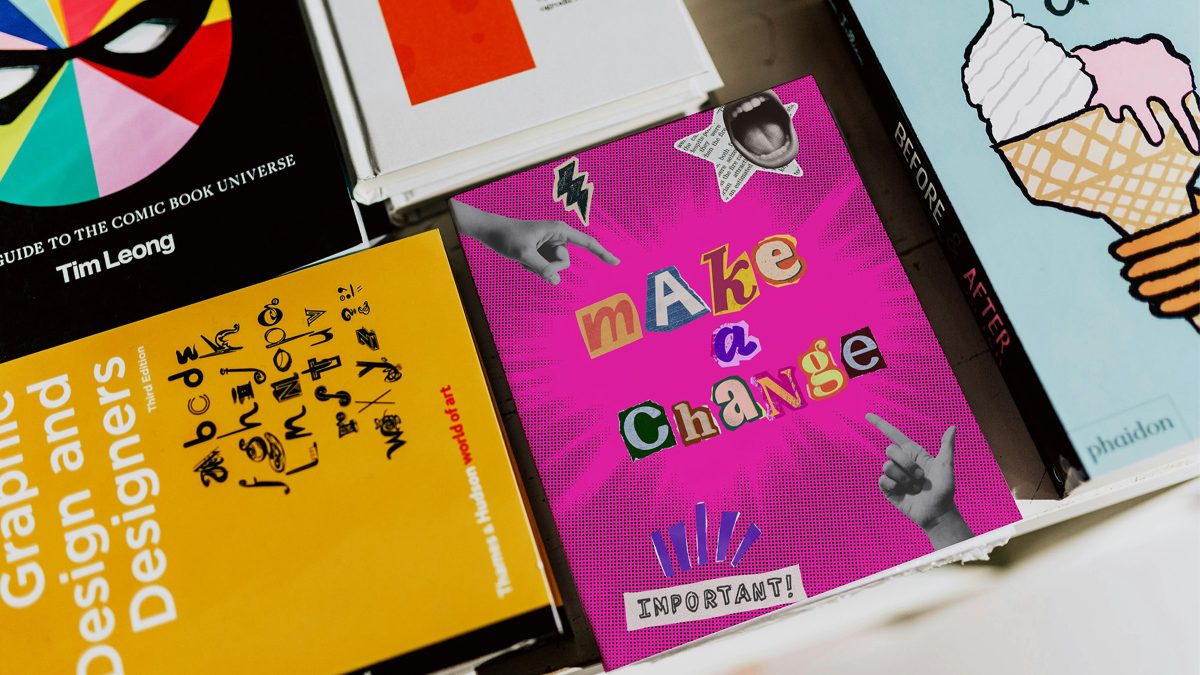
Feminism is a word many people recognize, but not everyone understands in the same way. Gender inequality is still a very real issue in today’s society. Women and men are simply not treated equally and this is something I notice not only in the news, films, and television, but also in my own everyday life. Whether it’s feeling less safe when going out or walking home at night, or having fewer opportunities than my male colleagues or fellow students, these differences are still present. Although a lot of progress has been made in recent years, gender inequality remains a major problem. One I deeply care about and want to actively engage with.
Feminism is often misunderstood and still seen by some as something negative. There is a lot of confusion surrounding what feminism actually means. In this self-designed zine, I explore that question. I focus on feminism not only as a women’s issue, but as a societal one, showing how gender inequality affects men as well, and why men are an essential part of the solution.
So, what is a zine? A zine is a self-made, independent mini-magazine, often created in a DIY (do-it-yourself) style. Zines are typically personal, experimental, and sometimes rebellious, making them the perfect medium for sharing ideas and challenging perspectives.
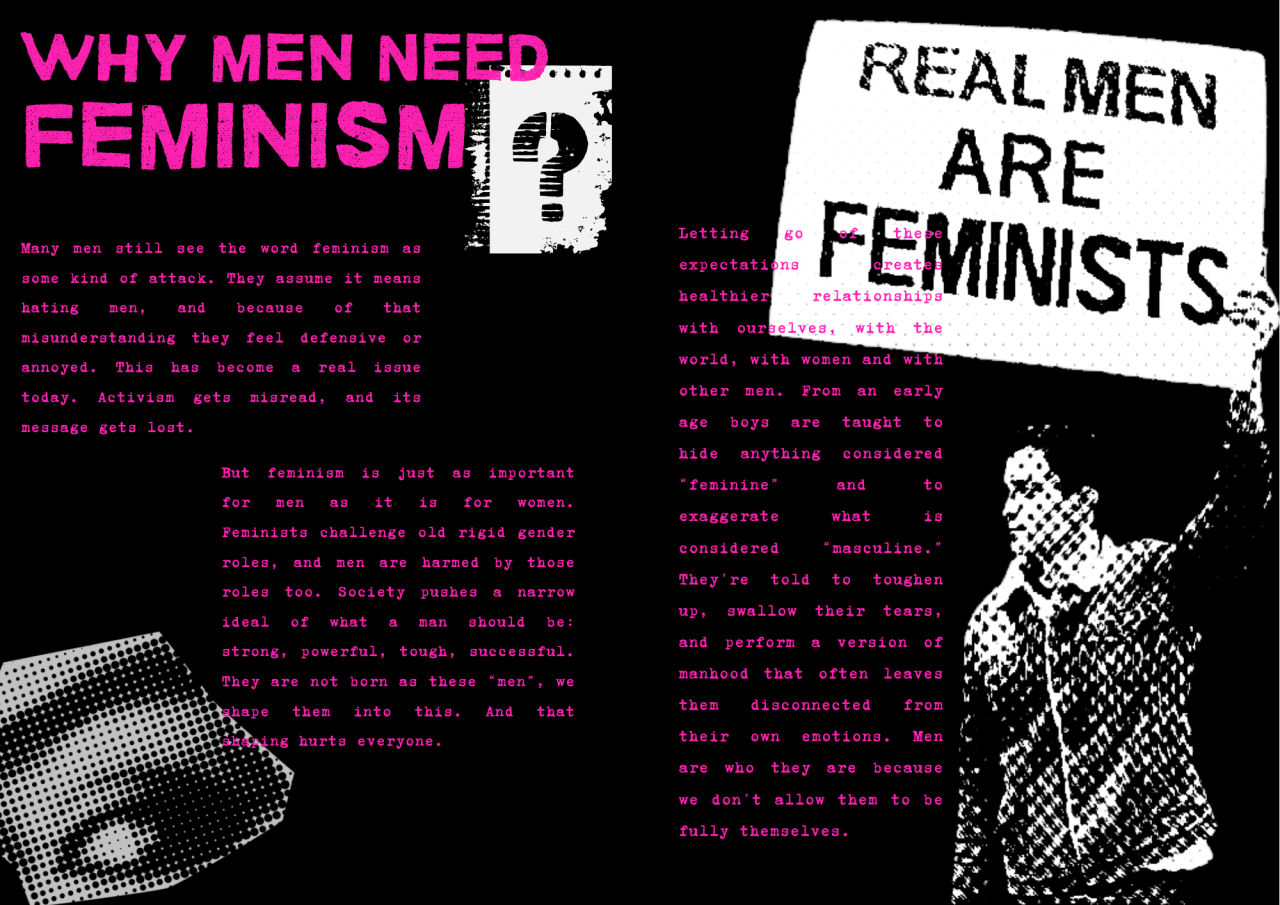
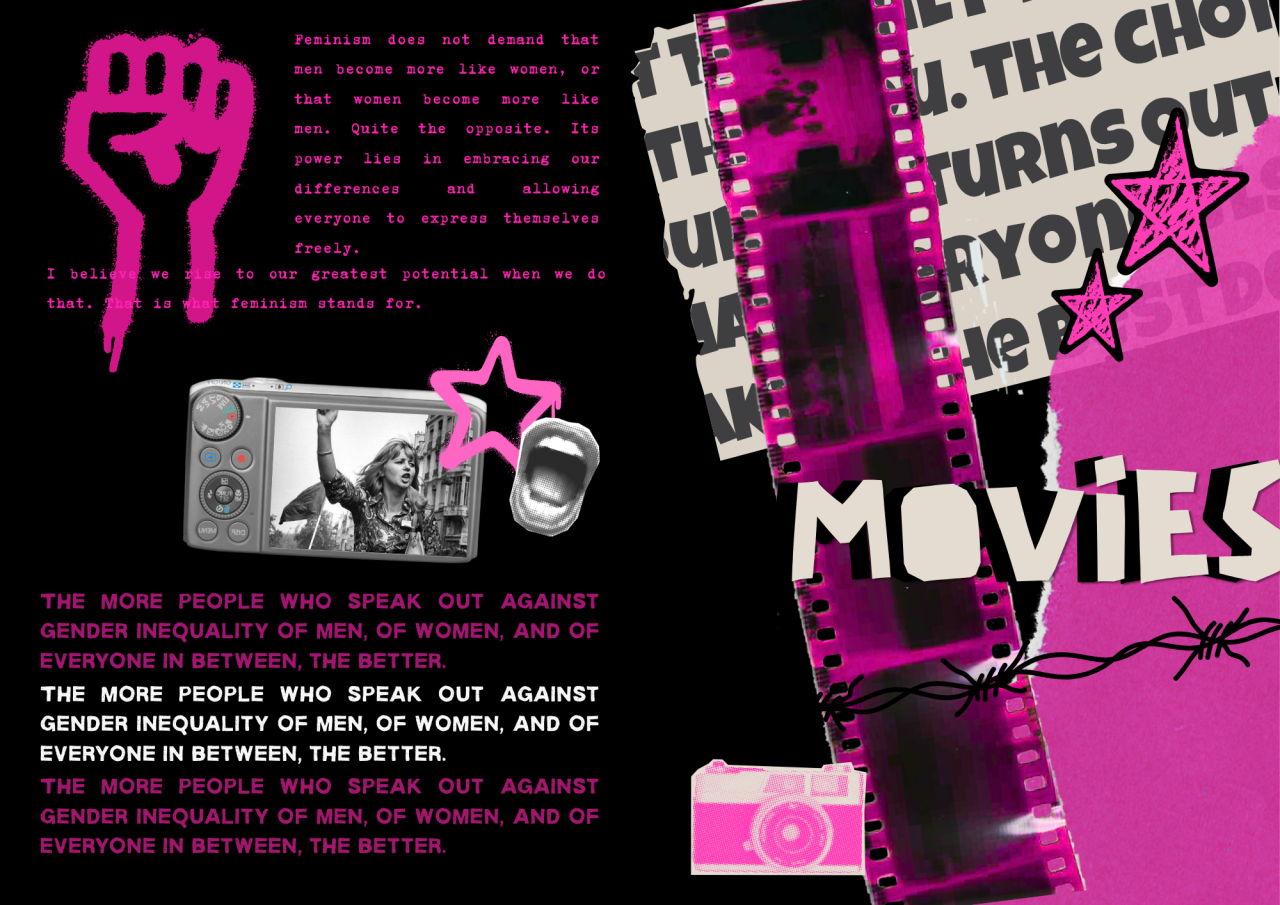
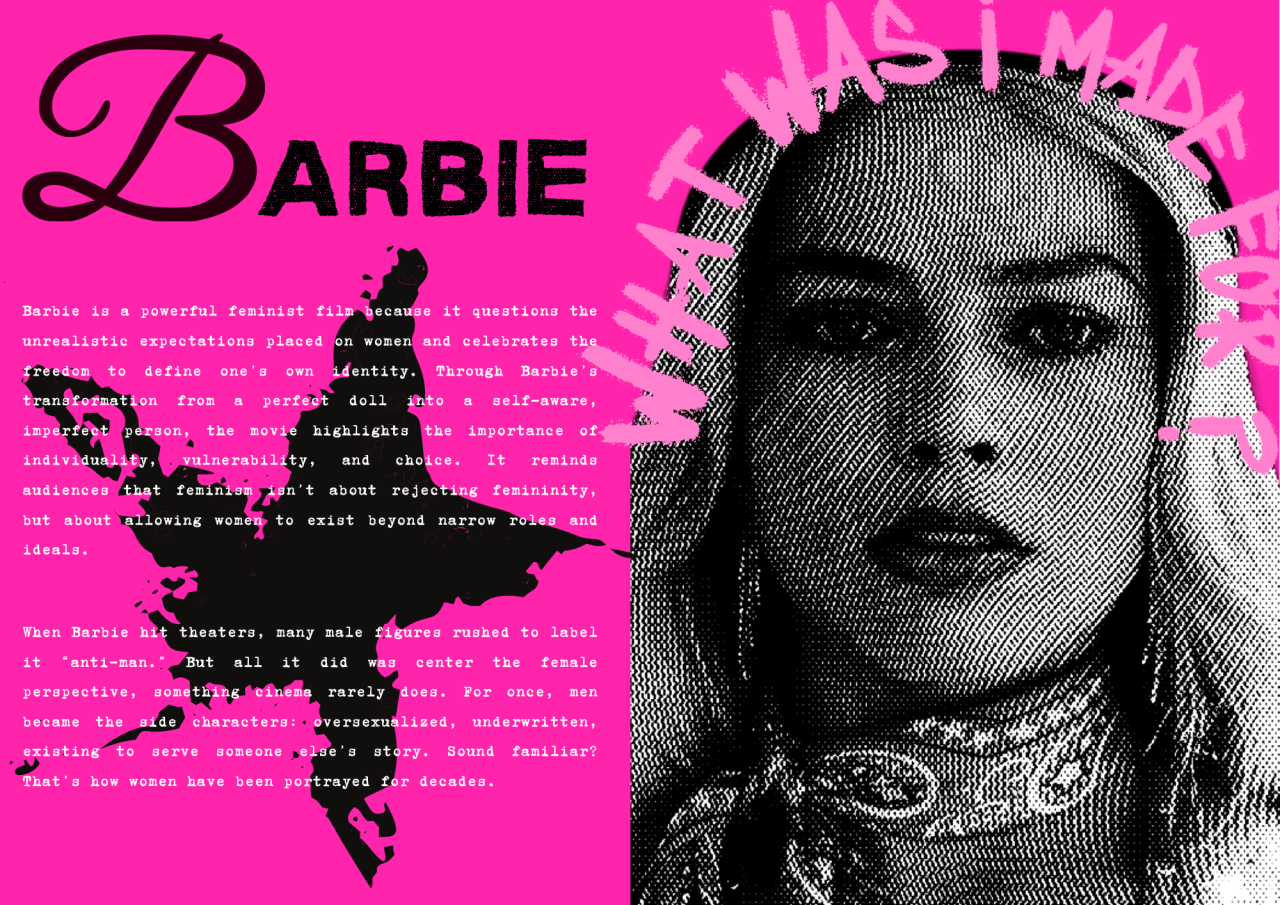
With this project, I wanted to combine my interest in graphic design with my interest in social issues, feminism in this case. I don’t see myself as an expert in either field. This zine comes purely from curiosity, personal experience, and engagement. By creating it, I learned a lot, and I hope that through it I can inform, inspire, and encourage readers to reflect on feminism from a broader perspective before diving into the pages that follow.
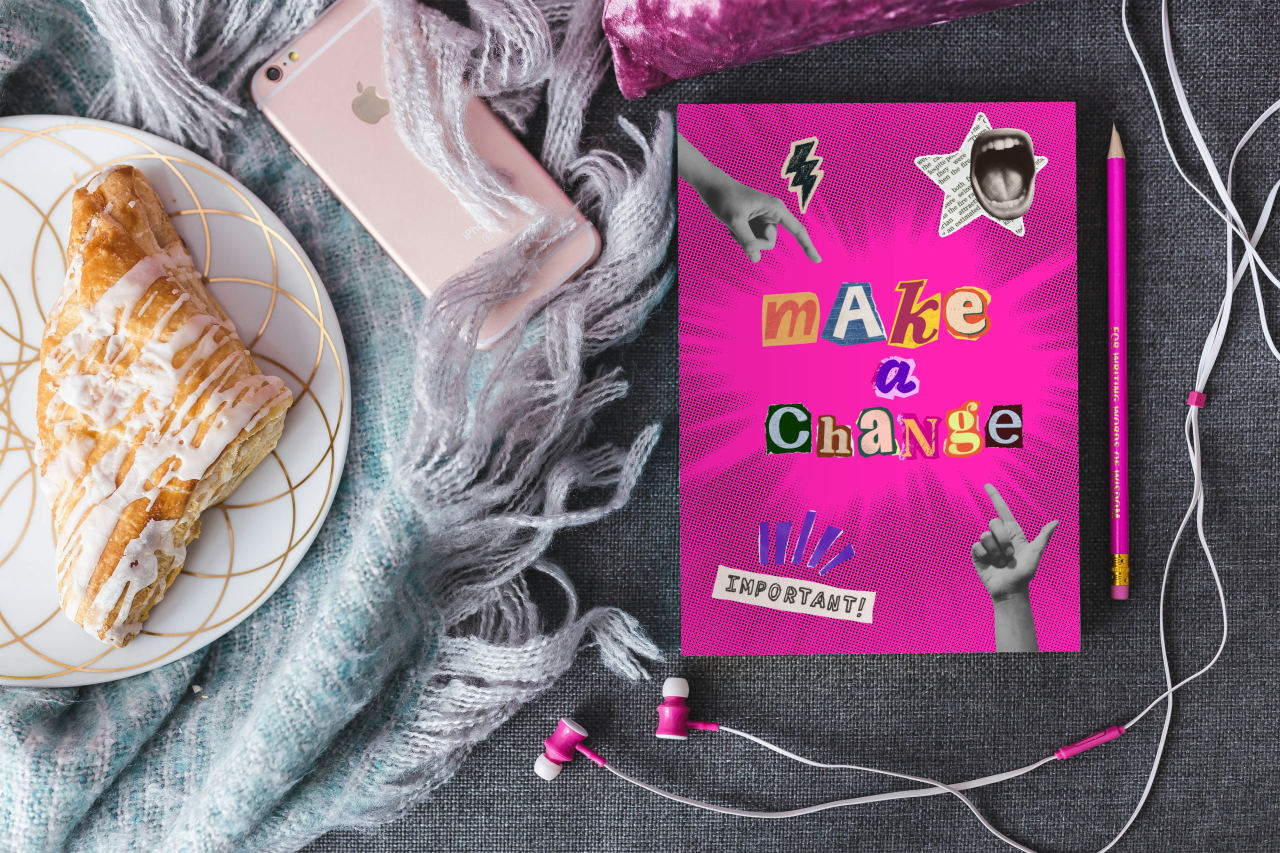
This is the link to the final zine! Hope you enjoy:)
https://heyzine.com/flip-book/cd727c87eb.html
(abb)
The biggest thing I learned from creating my own creative zine is patience. Creativity comes in waves. Not every day am I full of inspiration like I am on other days. At first, this was something I really had to get used to. Some days, I made a lot of progress and had many different creative ideas, I was in a flow. The next day, that flow would be completely gone. I didn’t have good ideas anymore, and I felt like I was stuck. In reality, I wasn’t stuck at all; the flow had just changed. This made it challenging at the beginning to find a rhythm that worked for me.
At one point, I decided to make a complete switch and start over. I wasn’t happy with the layout because I had combined too many different styles, forcing myself to keep pushing even when I wasn’t feeling inspired. Later, I learned to recognize when I was in a creative mood that allowed me to make real progress on my zine.
This shift was a great decision. After that, I was able to make significant strides in my zine. On days when I felt creative, I focused mainly on the design. On less inspired days, I concentrated more on the content. This approach helped me distribute my energy effectively across the whole project.
I really enjoyed making this zine, and I hope it encourages more people to explore and learn about topics like feminism.